
“Fewer Large Stores, Stronger Urban Hubs” Renault Korea Redraws Its Showroom Strategy
"대형 매장 줄이고, 도심 속 거점 키운다"르노코리아, 전시장 운영 '새판 짜기'
“QR-code entry with no staff”… 24-hour open showrooms
AI consultation linked with test-drive reservations… building an “integrated customer journey”
“Replacing large stores with spaces that draw customers in”
As consumer behavior in the finished-vehicle market changes, car showrooms are no longer places solely designed to close sales contracts. Instead, they are evolving into spaces where brands engage with consumers during the decision-making process.
Renault Korea is among the fastest to experiment with this shift, rolling out 24-hour open showrooms and AI-based consultation systems. The strategy prioritizes “time spent” over immediate sales, and focuses less on operational efficiency and more on creating moments that leave a lasting brand impression.
This is reporter Kim Hong-mo.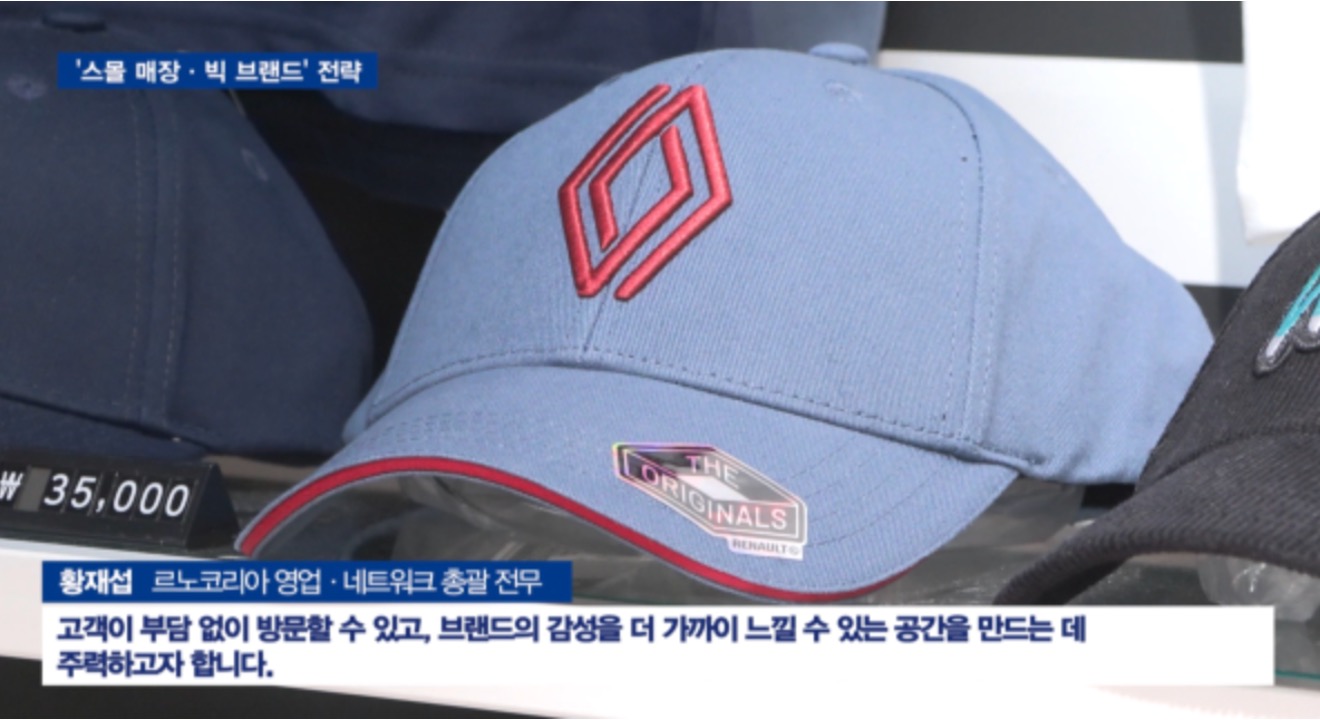
In downtown Gangnam, Seoul, a space displaying vehicles can be seen through large glass windows. Even when no staff are present, customers can enter simply by authenticating with a QR code. It is a new type of showroom—open 24 hours a day, allowing anyone to browse the vehicles anytime.
Recently, consumption patterns in the finished-vehicle market have clearly shifted toward experience-based decision-making, with buyers visiting multiple brand showrooms to compare before signing a contract. The center of gravity in purchase decisions is moving from price to experience.
In response, Renault Korea aims to attract not only customers with immediate purchase intent, but also those who wish to browse casually without pressure.
[Interview] Hwang Jae-seop / Executive Vice President, Sales & Network, Renault Korea
“Renault Korea plans to operate urban showrooms under the ‘rnlt©’ concept, displaying only three to four vehicles in compact spaces. In suburban areas, however, we will focus on integrated complexes that combine sales and service functions.
We are moving away from a large-store-centered model toward a ‘Small & Fancy’ strategy—creating spaces that customers can visit comfortably and where they can feel the brand’s identity more closely.”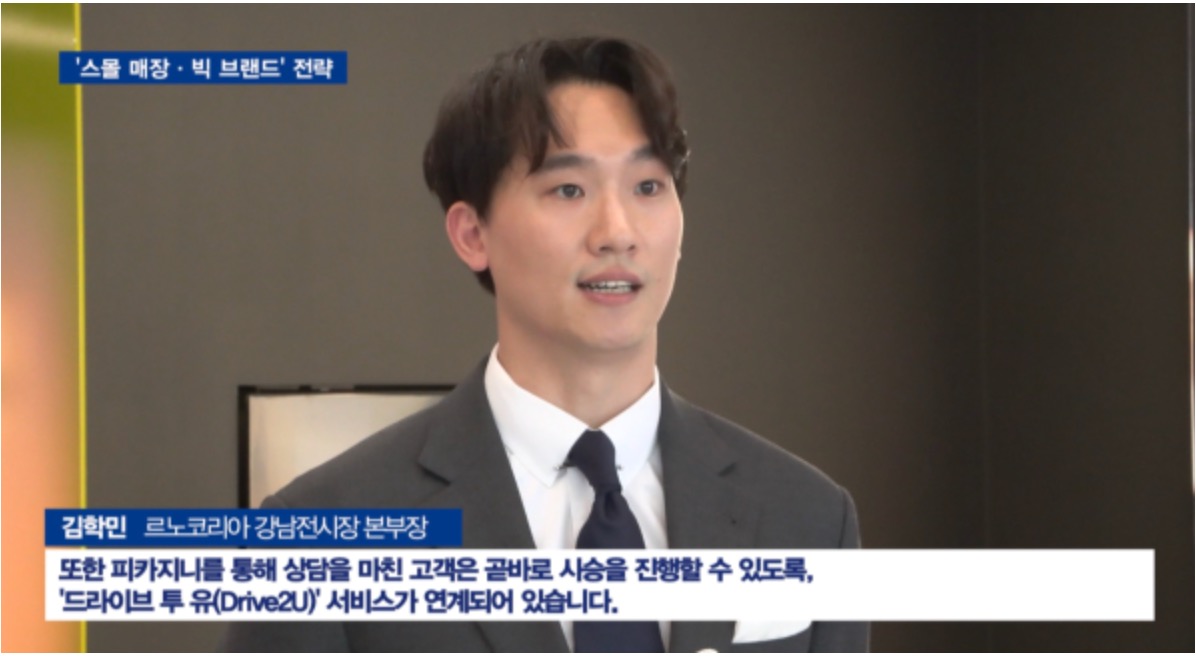
Renault Korea’s approach is not merely about reducing showroom size, but about building an integrated customer journey in which AI consultation and test-drive reservations are connected in real time.
Customers who receive vehicle consultations through the AI system can immediately book a test drive. This AI–test drive–consultation flow, all handled on a single platform, is the first of its kind among domestic automakers.
[Interview] Kim Hak-min / Head of Renault Korea Gangnam Showroom
“The unmanned showroom is operated through the ‘EntryGO’ service, and the AI consultation service ‘PIKAR Genie’ has been implemented to ensure visitors receive guidance comfortably.
After completing consultations via PIKAR Genie, customers can proceed directly to a test drive through the linked ‘Drive2U’ service.”
Although offline showroom visit rates in the domestic finished-vehicle market have dropped by more than 40% compared to five years ago, the average time each customer spends in showrooms has increased by 25%. This clearly indicates a shift—from visiting to buy a car, to visiting to experience a brand.
This also explains why Hyundai Motor Group is transforming traditional showrooms into “mobility lounges,” and why BMW and Mercedes-Benz are adopting boutique-style exhibition spaces—all aimed at enhancing the quality of experience.
In an era where large showrooms are shrinking and technology takes the place of staff interaction, Renault Korea has chosen a new concept: spaces that make customers want to come.
As digital touchpoints increasingly define brand competitiveness, attention is focused on what results these experiments by automakers will bring.
This has been Kim Hong-mo for Pax Economy TV.