
Beyond Deep Tech, the 'Deep Thought' Wave is Coming": NTU Professor Lee Kwan-min Appointed as Epikar's Scientific Advisor
'딥테크 넘어 딥소트 물결 온다' 에피카 과학자문 맡은 이관민 싱가포르 난양공대 교수
There are things that cannot be solved no matter how advanced artificial intelligence (AI) becomes. Poverty, famine, and social integration beyond various conflicts are among the difficult challenges that cannot be resolved through technology alone, regardless of advances in AI and information technology (IT).
This is why humanistic reflection combined with science and technology has emerged as an important theme. To solve humanity’s universal problems, technological innovation must be integrated with knowledge from the humanities.
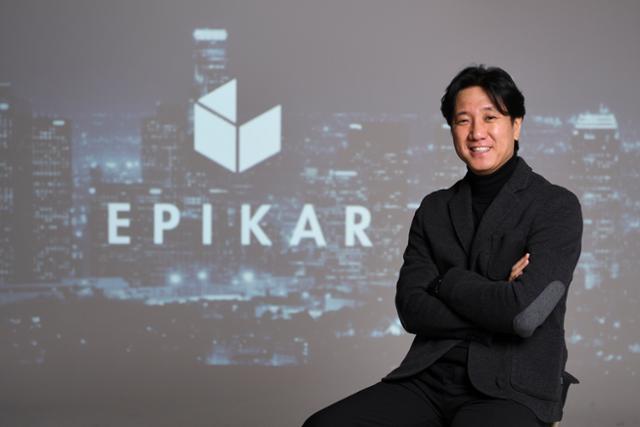
Lee Kwan-min (52), a professor at Nanyang Technological University (NTU) of Singapore and Chief Scientific Adviser (CSA) of startup EPIKAR, defines this concept as “Deep Thought.”
Deep Thought refers, in essence, to the convergence of technology and the humanities. Professor Lee believes that Deep Thought goes beyond core technologies, or deep tech, and will become a driving force shaping the future of humanity. The Korea Times met him at its office in Sejong-daero, Seoul, to discuss the concept of Deep Thought.
Introducing Convergence Technology for the First Time in Korea
Professor Lee is regarded as the first figure in Korea to introduce convergence technology combined with humanistic insight.
Technologies such as swiping screens like turning pages of a book on smartphones and tablets, or moving one’s finger back and forth to find previous or next songs, were born from reflection on human behavior. As a result, users can intuitively operate devices without special training and experience a sense of comfort.
Steve Jobs, the late founder of Apple creator of groundbreaking products such as the iPhone and iPod—once emphasized that “Apple is not just a company that develops technology, but one that combines technology with the humanities.”
After graduating from the Department of Journalism and Communication at Sogang University, Professor Lee earned his master’s and doctoral degrees in media studies from Michigan State University and Stanford University. He gained international recognition for eight years of research on the theory of presence, which examines how people experience virtual worlds.
At age 29, he became a professor at the University of Southern California (USC), and at 35, a tenured professor. Presence theory explains how virtual experiences in games and social networking services influence real-life behavior. By applying this theory, researchers can understand what people truly want when using devices and services.
“To create good technology, products, and services, you must first understand what people want. That requires studying people before studying technology,” he said.
In 2009, in order to nurture innovative talent like Steve Jobs, Professor Lee took leave from USC and founded the Department of Interaction Science at Sungkyunkwan University, introducing an interdisciplinary curriculum combining humanities, engineering, and the arts. His students are now active as professors at leading universities, executives at major corporations such as Samsung Electronics, Hyundai Motor, and SK Telecom, as well as startup founders.
Recognizing his achievements, Samsung Electronics recruited him as its youngest executive director. There, he established a UX research group focused on user experience in digital products, with research outcomes later applied to smart TVs.
“When I joined Samsung, intellectual property issues made it difficult to continue at USC, so I resigned. While serving as head of the UX group, I also became the first executive in charge of Samsung’s in-house startup incubation program, C-Lab,” he recalled.
After five years at Samsung, he accepted an offer in 2017 from NTU often referred to as the “MIT of Singapore”and returned to academia.
“I had worked extremely hard and felt exhausted. I missed campus life,” he said.
At NTU, he serves as professor of computer engineering and business administration while also directing the UX Research Lab at the Wee Kim Wee School of Communication and Information. His research focuses on human computer interaction (HCI), including AI ethics and interactions between humans and digital systems.
Thanks to his research achievements, he was selected as a Fellow of the International Communication Association (ICA) an honor awarded through global voting to the top 0.1% of researchers. His academic papers have been cited more than 10,000 times.
Deep Thought: The Sum of Humanities and Social Sciences
Deep Thought evolved from his long-standing work on convergence technology.
“Deep Thought represents the accumulated body of humanities and social science knowledge humanity has built over time,” he explained.
“It is the collective understanding needed to deeply comprehend issues such as poverty, the environment, and social integration.”
When such knowledge is combined with technology, innovation capable of transforming the world becomes possible. Deep Thought acts as the trigger for meaningful innovation.
“Digital transformation that focuses solely on technological change does not lead to true innovation,” he said.
“At best, it produces superficial changes like toothpaste caps that can stand upright. That is the limitation of deep tech that focuses only on technology.”
As an example of technology developed without sufficient understanding of people, he pointed to Tesla.
“Tesla transformed car sales from dealer-based face to face transactions to online sales,” he said.
“This works well for knowledgeable ‘cherry consumers,’ but not for ordinary buyers. Consumers without expertise want professionals to guide them through recommendations, registration, and insurance. They also want ongoing support after purchase. Tesla failed to fully account for these needs.”
When human-centered research leads product and service development, social problems can also be addressed.
“Companies must integrate social issues into their products not just functions and technology if they want people to empathize,” he said.
“Eco-friendly products that reduce waste are good examples. This connects directly to ESG management. Ultimately, ESG is also rooted in Deep Thought.”
Startups Leading the Deep Thought Movement
Professor Lee believes Deep Thought represents the next wave of innovation.
“Deep Thought will become a new wave that surpasses deep tech,” he said.
“It is an effort to solve difficult societal issues such as low birth rates and aging populations by integrating Deep Thought. These movements are especially visible among startups.”
He noted that large corporations face structural limitations in overturning established systems all at once.
This is why he joined EPIKAR as CSA.
EPIKAR developed a Dealer Management Solution (DMS) that digitizes automobile sales processes previously dependent on paperwork. With DMS, new vehicle inventory, sales, delivery, and test drive reservations can all be handled online. BMW Korea and its seven official dealer groups have adopted parts of EPIKAR’s DMS.
“CEO Han Bosuk and major shareholders visited Singapore in 2022 to propose that I join as CSA,” he said.
At EPIKAR, his role is strategic advisory.
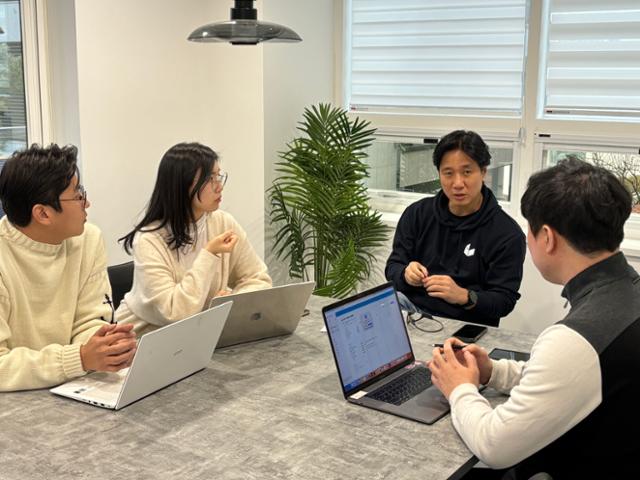
“I research how consumers can experience innovative car purchasing journeys through EPIKAR, and I also provide Deep Thought education to employees.”
Deep Thought–Driven B2C Expansion
EPIKAR is now launching a new B2C business based on Deep Thought.
“Beyond our existing B2B operations, we are preparing a comprehensive solution covering the entire lifecycle from vehicle maintenance to resale,” he said.
To prepare, the company conducted months of research involving Korean consumers, dealers, bloggers, and YouTubers, aiming to compensate for the shortcomings of Tesla’s online sales model.
The first Deep Thought–based results are expected by the end of this year.
“We plan to release a pilot version at year-end and officially launch the B2C business. To support this, we plan to acquire several major automotive dealerships in California. Related investments have already been secured.”
Supporting Asian Expansion and Deep Thought Startups
Professor Lee is also assisting EPIKAR’s expansion across Asia. During seven years in Singapore, he built networks across China, Taiwan, Vietnam, Malaysia, and India through lectures and academic activities.
He has supported the overseas expansion of Korean startups such as Dumumuri, Constackts, and O2O.
“For example, I helped fintech startup Dumumuri expand into Singapore. They developed AI-based investment technologies.”
Establishing a VC for Deep Thought Startups
Profitability is essential for Deep Thought to be sustainable. Companies must be able to generate revenue through it.
To that end, Professor Lee plans to establish a venture capital (VC) firm and accelerator (AC) dedicated to supporting Deep Thought startups.
“There are many founders trying to solve issues such as population decline, poverty, and environmental pollution by integrating technology,” he said.
“I want to support them through both VC and AC structures.”
Unlike conventional venture capital firms, Deep Thought VC will operate differently.
“Rather than focusing solely on financial investment, it will connect companies with wealthy patrons, scholars, and expert communities a new model of venture capital.”
He plans to launch the Deep Thought VC within the year, investing globally.
“Supporters who share this vision are already stepping forward. Fundraising is not a concern. Singapore offers strong opportunities to collaborate with both domestic and international investment institutions.”
Looking ahead, his goal is to serve as an ambassador of Deep Thought.
“I want to write books, continue research, and over the next decade nurture young Asian founders doing meaningful work through Deep Thought VC.
That has been the consistent goal of my life.”